
As a teacher, I am passionate about bridging the gap between our highly able pupils and those who are navigating school but finding daily learning a trial and difficult to understand. Every child is an individual, and of course, they will have their own needs, interests, and hobbies, but shouldn’t education be universally achievable for all? Some children are just born ready to learn, coming to school and thriving. Like sponges, they absorb everything taught and discuss it with their teacher. But how do you reach those kids who find school challenging? When the learning aspect does not come easy? These are questions teachers ask themselves every day.
I believe the early years are the most significant part of a child’s education, shaping how they formulate concepts, ideas, and skills. While meeting these outcomes, they forge a path for their learning, which will impact them throughout their lives. The approach to learning can be the difference between a child who succeeds and those who feel they are always trying to catch up. It is not only the responsibility of schools or teachers to provide experiences and opportunities for new concepts, but primarily the role of parents to ensure their child receives the best start with ample access to a variety of learning experiences. Schools are designed to complement and enhance what begins at home, which explains why some children arrive ready to learn while others do not see the value in education at all. Their early attitude toward the learning environment is directly shaped by the experiences fostered at home.
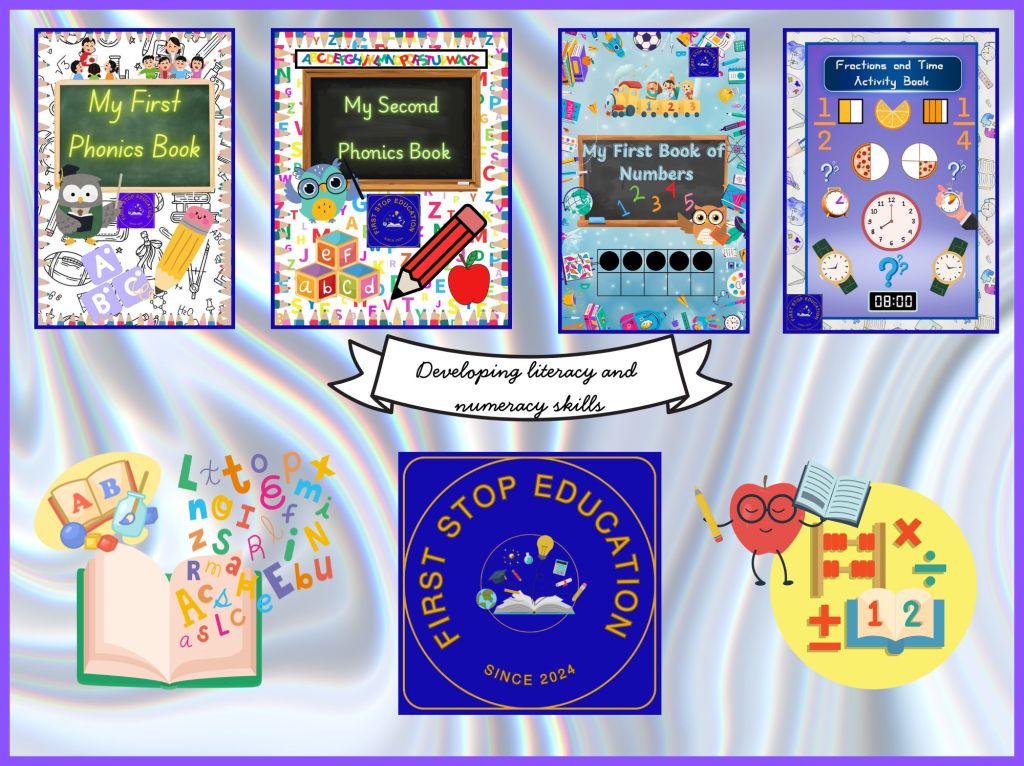
Now, I am not referring to children who have other needs or may have an SEN diagnosis. These children face different challenges, and teachers are regularly retraining to ensure they can meet all pupils’ needs to the best of their abilities and resources. It’s the children who want to learn but find they cannot make the connections as quickly as their friends. This is why I developed a range of early and first-level (CfE – Curriculum for Excellence) numeracy and literacy books to help all children, no matter how difficult the concept, find a way to better retain their knowledge and skills. These books are designed to be mostly completed individually, with some parent/adult participation. The skills we try to teach in school to our bigger classes have been organised and structured on the pages of these texts.
In one-on-one sessions with an adult for teaching, directing, scaffolding, and building confidence, children can discover the tools and strategies that work for them and advance their learning. I would love nothing more than to provide each and every child in my classroom with ample one-on-one support; however, with class sizes generally exceeding 20 and sometimes reaching 30, teachers, despite their best efforts, recognise the need to accommodate larger classes by implementing rotational learning, including whole class, group, and individual teacher time. This approach is enhanced by pupil-paired instruction and group activities, granting children opportunities to teach and learn from one another. Peer support is invaluable and essential in our fast-paced world. But what can we do when a child requires more one-on-one time with their teacher?
The books I have created are designed to allow parents to be teachers and keep up with current outcomes and curriculum planning, providing tips and examples of how these foundational skills can be taught in school. Working one-on-one with your child while using these books to give learning focus and direction, and complement what is already being driven in their education at school, will give your child the best possible access to the strategies and skills needed to become experienced learners who engage with concepts and make connections.
Four educational books are currently available, and more are under development to supplement the early skills already developed and revisited in these first four texts.
My Second Phonics Book (coming soon)

Leave a comment