
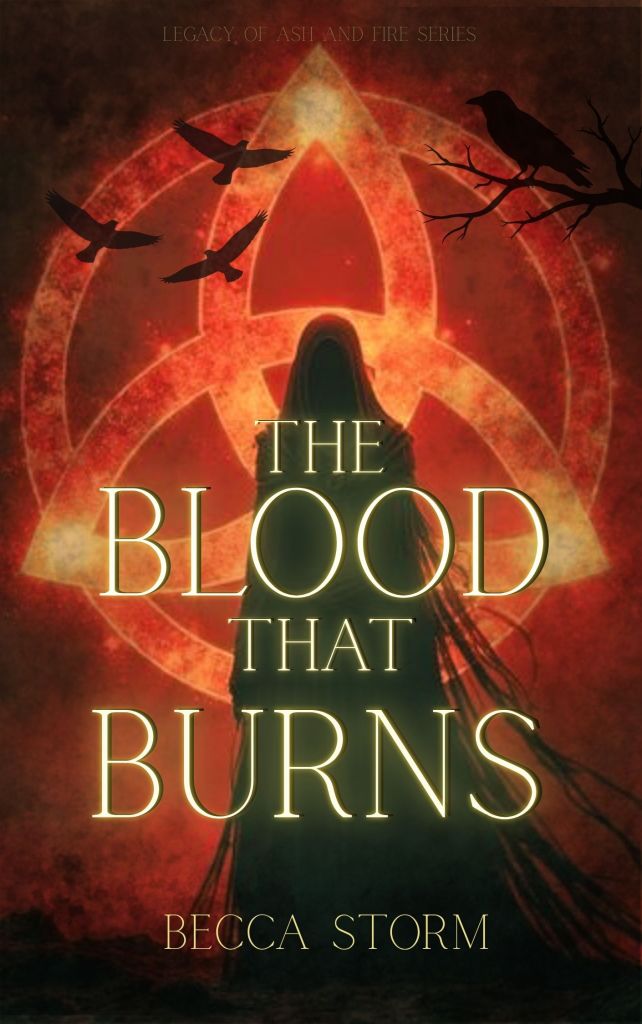
The Blood That Burns (Book 1 of The Legacy of Ash & Fire)
Critique Partners, Editing, and Formatting with Atticus
There’s a moment during every writing journey where the excitement of finishing a novel collides with a terrifying realisation:
Now you have to make it look professional.
And honestly? That part matters far more than many new authors realise.
Readers may discover your book because of the premise or cover, but they stay because the experience feels polished, immersive, and trustworthy. Formatting, editing, pacing, readability, and presentation all shape whether a reader feels they are holding an amateur draft or a professionally crafted novel.
As someone navigating the self-publishing world myself, I wanted to talk honestly about a few of the biggest things that can elevate an indie book immediately — especially for fantasy authors working with larger, lore-heavy stories.
1. Critique Partners Are Essential
No matter how experienced you are, you cannot fully see your own book objectively.
You already know:
- the lore,
- the twists,
- the character motivations,
- the emotional subtext.
Readers don’t.
That’s why critique partners are invaluable.
A good critique partner doesn’t simply point out typos. They help identify:
- repeated phrases,
- pacing issues,
- scenes that drag,
- confusing lore,
- emotional beats that don’t land,
- or characters that need clearer distinction.
Fantasy writers especially benefit from this because we often become too close to our worlds. What feels obvious to us may feel vague to a reader encountering the mythology for the first time.
One of the biggest lessons I’ve learned recently is this:
Repetition becomes invisible to the author long before it becomes invisible to the reader.
Having trusted readers highlight recurring scene structures, repeated emotional reactions, or overused phrases can strengthen a manuscript dramatically without changing the heart of the story.
And importantly… critique is not failure. It’s refinement.
2. Professional Formatting Changes Everything
Formatting is one of the fastest ways readers subconsciously judge a book.
Good formatting becomes invisible.
Bad formatting pulls readers out of the story instantly.
Things like:
- cramped margins,
- awkward spacing,
- inconsistent scene breaks,
- poor chapter layouts,
- or hard-to-read fonts
can make even an excellent novel feel unfinished.
For my own projects, I’ve been using Atticus, and honestly, it’s been one of the best tools I’ve found for indie publishing. And I have only just recently engaged with this formatting system. My books now look so much better, and it has instantly elevated the look from okay to a professional finish.
Especially for fantasy authors writing longer novels.
3. Why I Recommend Atticus
What I appreciate most about Atticus is that it allows authors to focus on:
- readability,
- clean layouts,
- professional typography,
- and export simplicity
without needing advanced design knowledge.
A few things I particularly like:
- Easy paperback and Kindle formatting for KDP
- Scene break handling
- Consistent chapter styling
- Fast export options
- Clean 5×8 formatting
- Adjustable margins and gutter settings
- Visual previews before export
For larger fantasy novels, formatting becomes surprisingly important because page count affects:
- spine width,
- printing costs,
- readability,
- and visual balance.
For example, with longer fantasy paperbacks, adjusting:
- inside margins,
- gutter width,
- and line spacing
makes a massive difference to how readable the final product feels.
4. Professional Doesn’t Mean Perfect
This is something I think many indie authors need to hear more often.
Traditional publishing is not flawless.
Even major fantasy releases contain:
- typos,
- pacing issues,
- continuity errors,
- repetitive phrasing,
- and structural problems.
The goal is not perfection.
The goal is creating a reading experience immersive enough that readers stop noticing the mechanics entirely.
That comes from layering:
- strong storytelling,
- clean formatting,
- emotional character work,
- careful editing,
- and consistent presentation.
5. Readers Remember Atmosphere and Emotion Most
One thing I’ve realised while preparing my own books for ARC readers is this:
Readers rarely remember perfect prose.
They remember:
- how a scene made them feel,
- which characters haunted them,
- which lines stayed with them,
- and whether the world felt alive.
Polishing a novel professionally simply allows those emotional moments to shine more clearly.
The story still matters most.
Always.
But giving that story the strongest presentation possible is one of the best investments a self-published author can make.
Final Thoughts
Self-publishing has changed enormously over the last decade. Indie fantasy in particular is producing some of the most ambitious, atmospheric, and emotionally powerful stories in the genre right now.
Professionalism is no longer about having a traditional publisher behind you.
It’s about:
- taking the craft seriously,
- refining your manuscript,
- listening to critique,
- investing in presentation,
- and respecting the reader’s experience from the first page to the last.
And honestly?
That process — difficult as it can sometimes be — is part of what makes building a book world so rewarding in the first place.
Happy Reading
Becca

Leave a Reply